
Welcome to AMPI
The Australasian Marine Pilots Institute is the professional body representing marine pilots throughout Australasia. It assists in the setting of standards, safety management and provides support and guidance with ongoing professional development.
AMPI provides advice to regulators on how to improve operational safety in our ports, and ensures that member pilots and their organisations continue to lead in world’s best practice. Together with its partners, AMPI has developed a set of training standards for both initial and continual training for pilots. As a partner of the International Marine Pilots Association, AMPI also has input into all important decisions made by the International Maritime Organisation.
Pilotage in Australia
Since the first settlement of Sydney Cove in 1788, marine pilotage has played an important role in Australia. One of the first pilots, Robert Watson, was a midshipman in the First Fleet vessel HMS Sirius. Once a safe path from Sydney Heads to the Cove was sounded out, in 1811 it became Mr Watson’s job to ensure that future vessels to and from the new settlement were safely navigated among the dangerous currents and rocks, to deliver their essential cargo.
As the settlement grew, so did the pilotage requirement. Based in Watsons Bay (named after the aforementioned Robert Watson) a small team of professionals trained up and formed the colony’s first pilot service. They would row out to sea in a flat bottom whaler, board the incoming ship using a rope ladder and safely guide the vessel in.
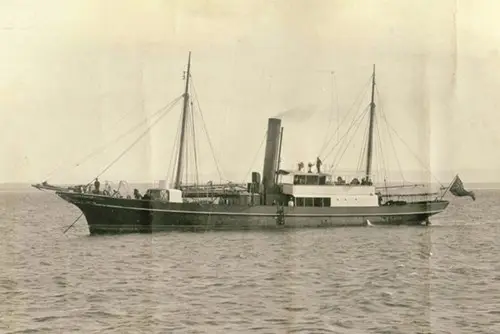
New pilotage services were established around the country to service the developing colonies, with Melbourne, Hobart, Brisbane, Adelaide, Perth and Darwin ports all starting their own pilotage services. In addition, many smaller ports – some now non-existent – had resident pilots to guide the ocean going vessels in and out of port, often through very treacherous conditions.
Not much has changed in over 230 years; pilots still meet vessels off the port entrance. Thankfully whalers are a thing of the past; now smaller diesel powered boats carry the pilots to their charges. Once alongside a vessel, the pilot must still climb the proffered rope ladder, sometimes through a distance of nine metres, just as their forebears did. If a port predominantly services vessels able to take a helicopter, aerial transfers may be the norm, with pilot boats used either as a backup or when conditions preclude the use of a helicopter.
Pilots are skilled at all weather operations. They can conduct their vessels through strong winds, heavy seas, fog and rain. Most have been Master Mariners with years of seagoing experience before becoming specially trained as pilots. Sometimes recruits have even operated their own ships within a port after being trained and granted a pilotage exemption.
From AMPA to AMPI – our history
AMPA
The Australian Marine Pilots Association had its beginnings in 1988, when Capt Richard Toone, realising the disparate nature of Australia’s representation at the Melbourne IMPA conference, canvassed pilots around the country to form a professional association. The aims of the association were to give a united voice to all marine pilots on purely professional and technical matters and in particular:
- To promote understanding of a pilot’s role in the protection of the marine environment.
- To exchange information with pilots worldwide.
- To provide governments and port authorities with technical expertise in marine pilotage.
- To advise on the training of marine pilots.
- To liaise with shipowners, importers, exporters and other port users on pilotage matters.
- To represent Australian marine pilots internationally through membership of IMPA.
The association was incorporated and launched in 1989 with the encouragement and support of pilots from many ports and the Reef. By 1993 AMPA had a wide representative membership and was invited to be a member of the AMSA navigation sub-committee. In 1994 the structure of AMPA was established formally and office bearers were appointed.
There was an epiphany for the association in 2003. At an AMPA workshop held in Brisbane in March, it was decided to form a joint working group to develop proposals for providing alternatives to the then current methods and systems of recruitment and training of marine pilots, having regard to the nature and extent of the anticipated shortage of marine pilot recruits in Australia.
The resulting McCoy Report identified an impending shortage of suitably qualified persons for recruitment into the marine pilotage profession if the current selection and training methods were maintained. It made a number of recommendations centred on the establishment of an alternative training pathway to complement the traditional Master Class 1 route. The alternate pathway provides a source of suitably qualified personnel who may then be recruited by pilot services to commence training as pilots. The alternate pathway is seen as providing bridging access to the industry for persons who have other nautical backgrounds (like naval officers and restricted certificate holders). That is, recruitment of mariners with maritime qualifications and experience and having the necessary aptitude but without qualification as Master Unlimited.
AMPI
On 19 September 2008 the Association’s members resolved to wind up the Association and to transfer funds to a new organisation to be called the Australasian Marine Pilots Institute (AMPI). The executive received legal advice which indicated that the most appropriate structure for AMPI would be a public company limited by guarantee. This is a form of non-profit company similar to an association but with the added benefit of being able to trade Australia wide due to its registration under the Corporations Act.
AMPI objectives
- Oversight of training standards
- Retain a current body of knowledge on pilotage
- Engage with all stakeholders in pilotage
- Establish standards